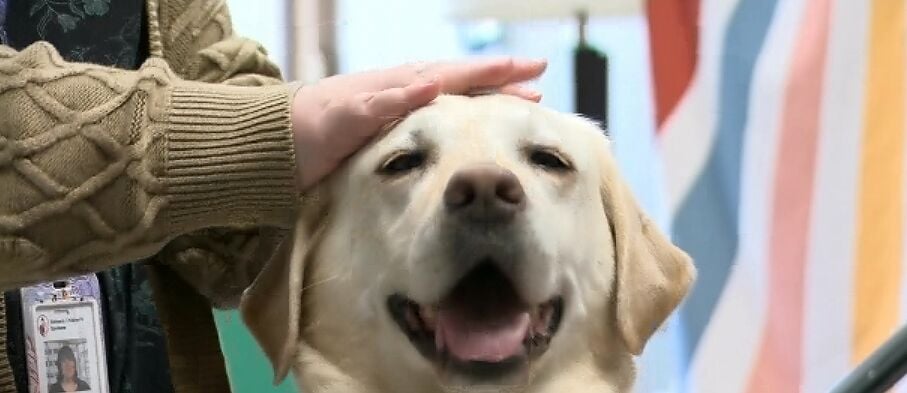
SPOKANE, Wash. — Chloe Landt brings her three-year-old son, Ben, to Shriners Children’s Hospital every week for physical therapy. Ben was born with spastic cerebral palsy, a condition that primarily affects his motor function and his ability to walk. What once felt like a repetitive and dreaded routine has transformed into something far more positive with the help of an unexpected team member: Ginny, a facility dog.
Ginny’s role at the hospital extends beyond simply being a friendly face. As a certified facility dog, she serves one of the most critical functions in a pediatric medical setting—making children feel comfortable and safe during their hospital visits. For Ben, Ginny has become a powerful motivator during his therapy sessions.
During his weekly appointments, Ben works on controlling his muscles and improving his balance using special Velcro shoes. The exercises are designed to strengthen his motor function, but the repetition can wear on both child and parent. “When you come to therapy every single week, it gets repetitive and just kind of ends up not being the greatest time. You kind of start to dread it a little bit,” Chloe said.
That’s where Ginny makes her difference. Ben throws a ball to the dog and bends down to pet her—simple actions that serve as therapeutic exercises. These interactions help him work on bending, balance, and coordination while keeping him engaged and having fun. The shift in Ben’s attitude has been remarkable.
“Ginny just gives him a little more confidence and makes the sessions more playful,” Chloe said. “He has a lot more fun with Ginny.”
The impact extends beyond the patients. Kristin Monasmith, director of marketing and communications at Shriners, described how meaningful Ginny’s presence has become for the entire staff. “When she comes in and snuggles in and flops over to give me kind of that hug and love so I can give her back that hug and love as well, that just…it’s the best feeling,” Monasmith said. “We feel lucky to have her.”
For Chloe, the addition of Ginny to Ben’s therapy journey represents something larger than just making hospital visits more enjoyable. She emphasizes the importance of maintaining normalcy and playfulness in the lives of children with disabilities, and she encourages others not to underestimate what children like Ben can accomplish.
“Having the normalcy and the playfulness and the fun added to these kinds of things just really help a lot,” Chloe said. “I would also say not to limit children with disabilities. They can do a lot more than you think and they’re just like any other kid.”
COPYRIGHT 2026 BY KXLY. ALL RIGHTS RESERVED. THIS MATERIAL MAY NOT BE PUBLISHED, BROADCAST, REWRITTEN OR REDISTRIBUTED.